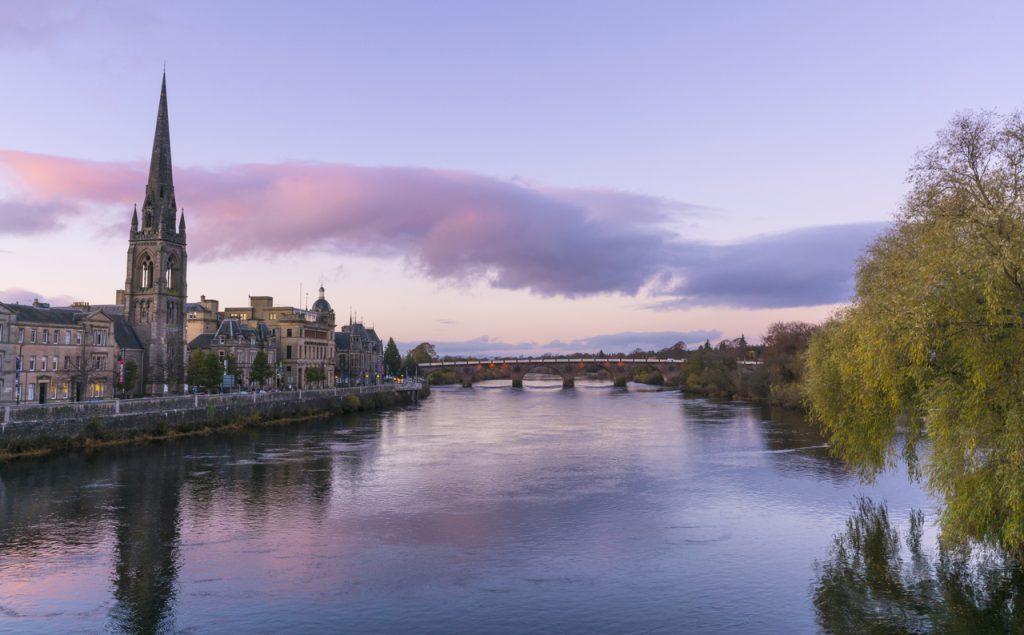
Situated on the banks of the River Tay, the city of Perth may be one of Scotland’s smaller cities but it’s impact on Scottish history is huge! With strong ties to Royal history, industrial heritage, and involvement in the Jacobite uprisings, you may be surprised to discover the rich historical and cultural background possessed by Perth.
Read on to learn more about the city’s history, starting way back in prehistoric times, journeying through the Middle Ages, right up to present day Perth!
Pictish Perth
Perth has been inhabited since prehistoric times. Findings show that early Mesolithic people occupied the city and areas surrounding it over 8000 years ago with standing stones from Neolithic times being found and thought to be from around 4000 BC. The name “Perth” itself comes from the Pictish word for “wood” or “thicket” which suggests that the Pictish people had settlements here in the Early Middle Ages. It is thought they settled on a raised mound of land within the River Tay which was shallow enough at the time to cross at low tide. Living on this raised mound would give the communities protection from the flooding the settlements on the banks of the river would experience frequently.

The Capital of Scotland
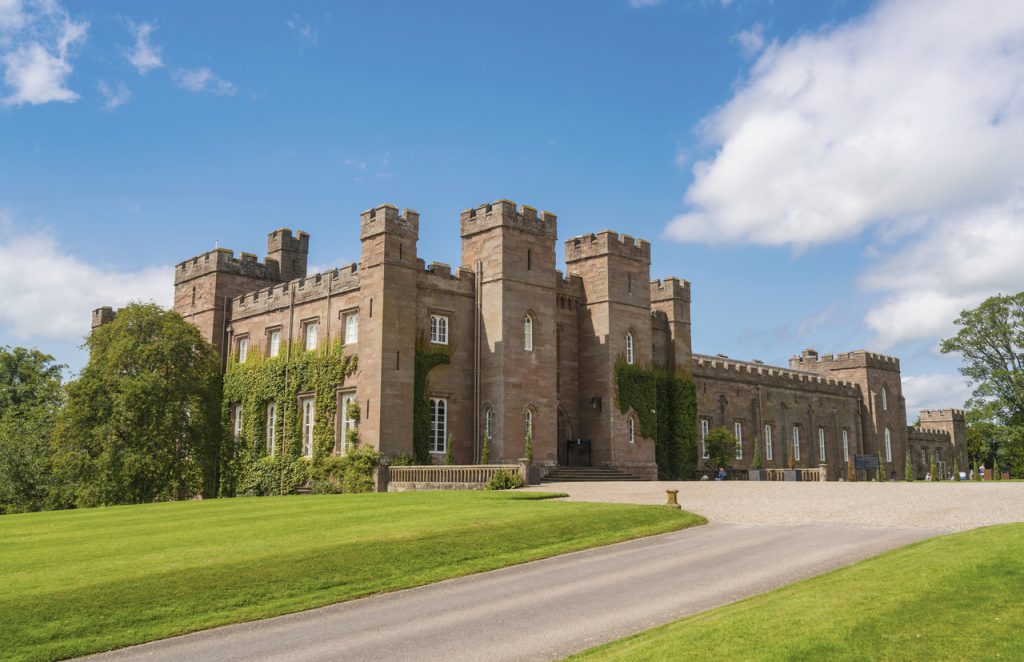
Perth was considered the capital of Scotland during the Middle Ages from the 9th to the 15th centuries. This was because it was the primary residence of Scottish monarchs and where the Royal Courts were held. Perth was effectively the main hub for the Kingdom of Alba, later known as Scotland, with all kings and queens of Scotland being crowned here at Scone Palace for many hundreds of years. Kenneth McAlpin, widely considered to be the first King of Scotland, was crowned at Scone Palace in 848 and Charles II was the last monarch to be crowned here in 1649. Although monarchs are no longer crowned at Scone Palace, it is still tradition for British monarchs to be coronated on the Stone of Scone (or Stone of Destiny) with this happening to Elizabeth II in 1953 and most recently, Charles III in 2023.
The Scottish Wars of Independence
Perth played a role in the Scottish Wars of Independence when Edward I of England brought his armies here in 1296. Perth was captured quickly by the English as it had very little defence. The English then began to build walled fortification around the perimeters of Perth, which was a town at the time. This was completed in 1304 and ordered to be destroyed by Robert the Bruce in 1312 when the town was taken back by the Scots. Robert the Bruce was crowned King of Scots at Scone in 1306 which enraged Edward I who was still in control of the town at this time. He ordered an army of 3000 men make their base at Perth with the Earl of Pembroke leading them, Edward I gave a “no mercy” order meaning that executions of captured Scots would take place without trial. Robert the Bruce and his army were subject to a surprise attack at Methven, around 6 miles from Perth. This resulted in a resounding win for the English with Robert the Bruce himself almost being captured twice. The remaining Scottish knights were forced to flee in defeat, leaving many of their men dead or captured and soon to be executed.
16th, 17th, and 18th Century Perth
The 16th century saw large amounts of religious unrest in Perth. Men were hanged for vandalising religious statues and the Blackfriars monastery was attacked. In May 1599, altars at St John the Baptist kirk were destroyed by angry mobs and the religious Houses of Blackfriars and Greyfriars were attacked. Scone Abbey was also sacked during this time. The religious conflict was so strong that the mother of Mary Queen of Scots, who was too young to rule at the time, had to step in to attempt to calm the rioting. She was successful in doing this, but the people of Perth were still extremely opposed to Catholic rule.
Charles II was crowned at Scone in the mid-17th century, the final Scottish King to be crowned here. However, less than a year later, the English would once again occupy part of Perth with Oliver Cromwell establishing a fortification south of the town, destroying the town’s hospital, bridge, and several residential areas to make way for this fort. This was demolished after Cromwell’s death with visible remains of the fortification still being present until the late 18th century. The Jacobite risings began in the 18th century and the town of Perth was supportive of this, with Jacobite supporters occupying Perth throughout the early and mid-18th century.
Present Day Perth
Throughout the late 18th and 19th centuries, industrialism grew exponentially within Perth. Major exports from the town included linen, leather, bleached goods, and whisky, with the town becoming a major port in Scotland. Perth also became a key transport town, especially when travelling to the Highlands. Throughout the 19th century, railways, horse-drawn carriages, and electric trams became the main transport methods within and out of Perth.
Perth lost its city status in 1975 when there was a restructure of the local government in Scotland. However, in March 2012, Perth’s city status was reinstated as part of the celebrations of Queen Elizabeth II’s 60-year anniversary on the throne. Today, Perth is a bustling city with over 40,000 people living there. Known as ‘The Fair City’ to locals, it is the administrative centre of Perth and Kinross council and has a diverse range of businesses contributing to its economy, as well as several visitor attractions which celebrate the city’s historical and cultural heritage that we have discussed in this blog post.
We hope this blog has inspired you to visit the city of Perth to learn more about the surprising but fascinating history dating back thousands of years. All of our packages are completely customisable, meaning you can incorporate a visit to Scone Palace or any of the other historical attractions available in Perth as part of your stay. To discuss one of our Scotland tours or castle trails, contact us here!